
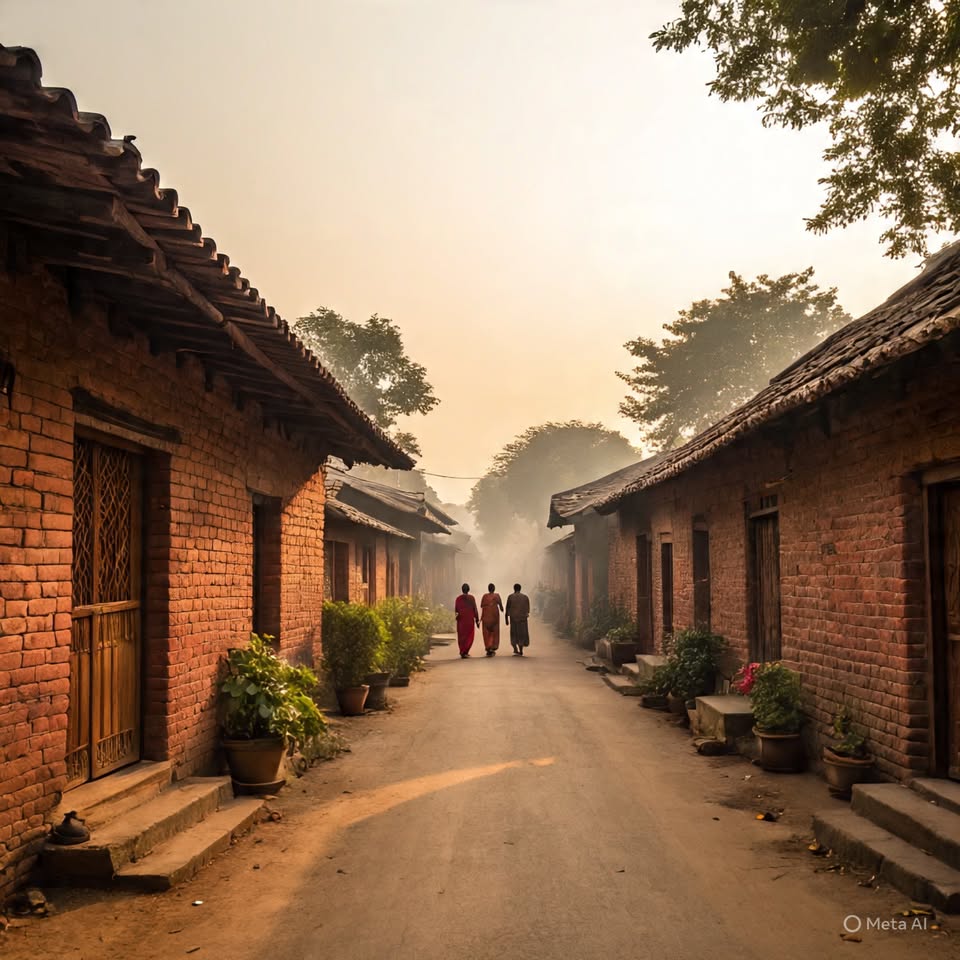

In Tamil villages, the day does not begin behind closed doors. It begins on the street. Long before offices open or buses arrive, village streets wake collectively. Doors open early. Sweeping begins before conversation. The sound of water being drawn from wells and taps establishes the first rhythm of the day.
Morning streets are functional spaces. They exist to prepare the village for the day ahead. Women draw kolams carefully, not as decoration but as a signal that the household is awake and ready. Men move cattle, check fields, or prepare bicycles and two-wheelers. Children walk toward schools in groups, their presence marking time more reliably than clocks.
Unlike urban mornings, which are hurried and private, village mornings are slow and visible. Activity happens outdoors because space allows it. Streets are wide enough to accommodate chores, conversation, and movement simultaneously. No single action dominates. Life overlaps naturally.
These streets also serve as informal communication networks. Who woke up late, who is unwell, who is absent — such details are noticed without inquiry. Awareness develops through repeated observation rather than announcement.
Morning vendors appear briefly. Milkmen, vegetable sellers, flower carriers move through quickly, completing their work before heat rises. Transactions are efficient and verbal. Trust replaces documentation.
The social order of the village is visible in the morning. Elders walk without urgency. Younger adults adjust pace around them. Respect is expressed through movement rather than speech. These unspoken codes are learned early.
Over time, infrastructure has changed. Cement roads replaced mud paths. Borewells replaced communal wells. Yet the morning street remains central. Even when households modernise internally, they continue to open outward.
Village streets in the morning are not nostalgic symbols. They are operational spaces where daily life begins in public view. Understanding them explains how community sustains itself without formal coordination.
Documenting these mornings matters because they are increasingly fragile. Migration, gated housing, and altered work schedules reduce shared time. But where villages remain intact, the street continues to function as the village’s first institution.


Comments / கருத்துக்கள்
No comments yet. Be the first to comment!
Leave a comment