
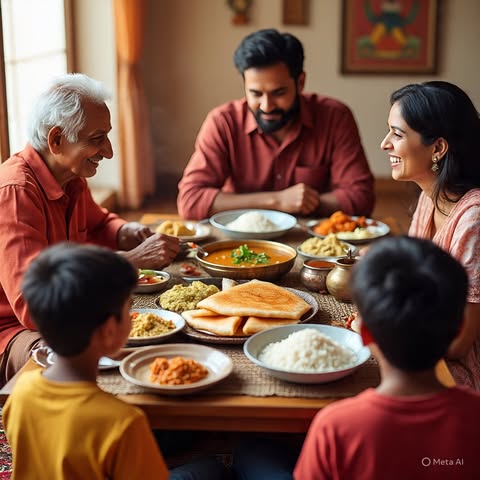

The Tamil family meal has never been just about food. It is about timing, hierarchy, conversation, and silence. In earlier generations, meals followed strict order — elders first, children last, everyone seated together. The menu was predictable, rotating weekly. Today, the table looks different. Schedules clash, preferences vary, and shared meals happen less frequently. Yet when they do, they still carry cultural weight.
In many homes, the lunch meal once defined the day. People returned from work or school specifically to eat together. The act of serving mattered — who served whom, in what order, and how much. These gestures communicated respect without words. While such structures have loosened, their memory still shapes expectations, especially among elders.
Dinner has gradually replaced lunch as the primary family gathering. Even then, full participation is not guaranteed. Some eat early, some late, some while checking phones. Rather than mourning this change, it is more useful to observe how families adapt. Shared time shrinks, but intention often remains.
Food itself has diversified. Earlier meals were seasonal by necessity. Vegetables appeared when available; dishes repeated without complaint. Today, variety is abundant. Children request foods influenced by school and media. Parents negotiate — mixing traditional dishes with newer preferences. Culture here becomes conversation, not command.
Festive meals still preserve older structures. During important occasions, families make the effort to eat together, often sitting on the floor even if daily meals happen at dining tables. These temporary returns to form are significant. They show that tradition is not forgotten — it is selectively activated.
In diaspora households, Tamil meals carry additional responsibility. Food becomes language replacement. Children who struggle with Tamil vocabulary still recognise rasam, sambar, poriyal. Cooking turns into storytelling. Ingredients carry memory across borders.
We avoid making nutritional claims about traditional meals. Our focus is cultural behaviour — how cooking, serving, and eating shape relationships. Even arguments happen at the table. That, too, is part of intimacy.
The decline of daily shared meals is real. But the disappearance is not total. It has shifted. Families gather weekly instead of daily. Portions change. Conversations shorten. Yet the table remains one of the few spaces where generations still meet face to face.
By documenting Tamil family meals, VividTamil records not loss, but evolution. Culture does not freeze. It negotiates. Every meal that brings people together, however briefly, keeps the table alive.
Comments / கருத்துக்கள்
No comments yet. Be the first to comment!
Leave a comment